
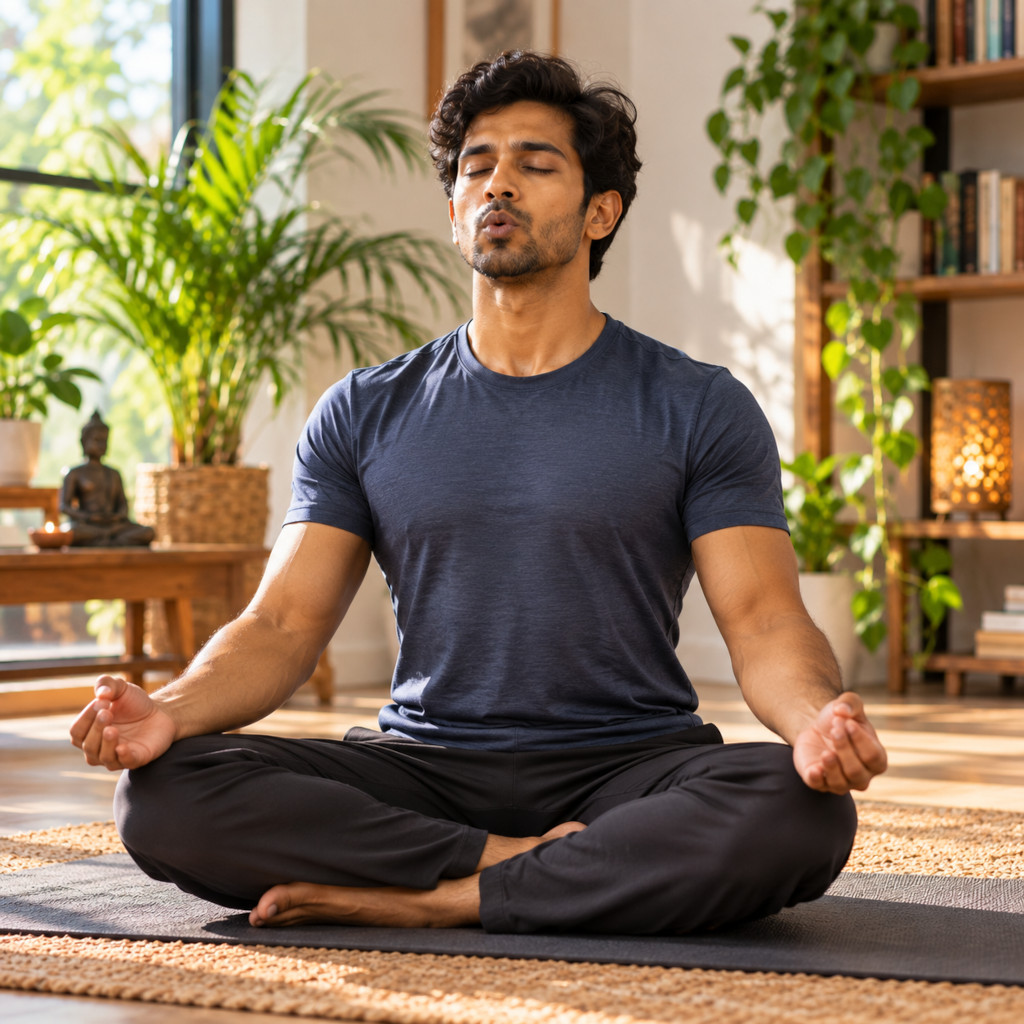
When stress builds, the breath often changes before we consciously notice it. It may become shallow, fast, irregular, or held. A simple breathwork practice can help bring attention back into the body and create a deliberate transition from mental tension toward a calmer state.
The following routine combines three distinct breathing patterns in sequence: balance breathing, skull-shining breath, and relaxation breathing. Each phase has a different character. The first establishes a steady rhythm, the second introduces a short period of active breathing, and the final phase slows everything down.
Before You Begin
Find a comfortable seated position where your spine can remain naturally upright without strain. Relax your shoulders, soften your jaw, and allow your attention to settle on the breath. Breathing should never feel forced. If you become dizzy, light-headed, anxious, uncomfortable, or short of breath, return to normal breathing and stop the exercise if necessary.
Skull-shining breath is considerably more vigorous than the other two techniques in this routine. It may not be appropriate during pregnancy or for people with certain cardiovascular, blood-pressure, eye, neurological, respiratory, or abdominal conditions. If you have a medical condition or are unsure whether vigorous breathwork is suitable for you, consult an appropriate healthcare professional before practicing it.
Part 1: Balance Breathing
Begin with a few minutes of balance breathing. The rhythm is:
1 : 1 : 1 : 0 (Inhale : Hold : Exhale : Sustain)
This means the inhale, breath hold, and exhale are equal in length, with no pause after the exhale. For example, you might begin with:
Inhale for 4 seconds → hold for 4 seconds → exhale for 4 seconds → immediately inhale again.
Continue for approximately three minutes. There is no need to use four seconds specifically. The important point is that the breath remains easy and controlled rather than becoming a test of endurance. Use this first stage to settle into the practice. Keep your attention on the regularity of the rhythm and the physical sensation of breathing.
Part 2: Skull-Shining Breath
After the steady rhythm of balance breathing, move into a short period of skull-shining breath, traditionally known as Kapalabhati. Unlike ordinary relaxed breathing, the emphasis here is on a short, active exhalation created by gently contracting the abdominal muscles. The inhale is comparatively passive: after each exhale, simply allow air to flow back into the lungs naturally. Think of the pattern as:
Active exhale → passive inhale → active exhale → passive inhale.
Begin slowly. Around one exhalation per second is plenty for most people starting out. Rather than forcing yourself to breathe continuously for several minutes, you can divide this section into comfortable rounds. For example:
20–30 breaths → rest and breathe normally → repeat for another round.
Over approximately two minutes, alternate between short rounds of skull-shining breath and brief periods of normal breathing. The movement should come primarily from the abdomen rather than from aggressively contracting the chest, throat, or face. Keep the shoulders relaxed. If the technique feels strained or produces dizziness, stop and return to normal breathing.
Part 3: Relaxation Breathing
Finish the routine with a slower pattern designed to emphasize a long, unhurried exhalation.
The rhythm is:
1 : 0 : 2 : 1 (Inhale : Hold : Exhale : Hold)
There is no breath hold after the inhale. The exhale lasts twice as long as the inhale, followed by a gentle pause before the next breath. For example:
Inhale for 3 seconds → exhale for 6 seconds → pause for 3 seconds.
Then begin the next inhale. Continue for approximately four minutes. Allow the exhale to become smooth rather than forceful. Imagine letting the breath leave the body rather than pushing it out.As you continue, notice whether your shoulders, face, abdomen, and hands begin to soften.
Putting the Whole Routine Together
A simple eight-minute version might look like this:
3 Minutes: Balance breathing — 1:1:1:0
2 Minutes: Skull-shining breath, broken into comfortable rounds
4 Minutes: Relaxation breathing — 1:0:2:1
The sequence deliberately changes character as it progresses. Balance breathing provides structure and focus. Skull-shining breath introduces a brief period of more active breathing. Relaxation breathing then shifts toward slower breathing with a longer exhalation.
When you finish the final round, release all counting and breathe normally for another minute or so. Notice how your breathing feels without trying to change it.
A Few Practical Tips
There is no benefit in forcing longer breath counts simply because they seem more advanced. Choose a rhythm that lets you remain relaxed.
Practicing on an empty or relatively light stomach is generally more comfortable, especially for skull-shining breath because the abdominal muscles are actively involved.
It can also help to use a quiet timer or an app rather than counting. Once you know the sequence, closing your eyes and following the sensations of the breath can make the practice feel more natural.
Most importantly, treat the ratios as a framework rather than a competition. Breathwork should feel deliberate and manageable.
From Activation to Stillness
One reason this three-part practice can feel satisfying is its progression.
You begin by creating order.
You move briefly into activity.
Then you deliberately slow down.
Instead of demanding that the mind become calm immediately, the routine gives attention something concrete to follow: rhythm, movement, and finally release. Even a few minutes can become a useful ritual for stepping away from a busy day, creating a transition after work, or settling yourself before a quieter part of the evening.
The goal is not to breathe perfectly. It is simply to spend several minutes paying close attention to something that is usually automatic—and then allow the breath to become effortless again.