
Stress doesn’t wait for a perfect moment. It shows up before meetings, during arguments, in traffic, or right when you’re trying to focus. The good news? You don’t need a long meditation session or a quiet room to calm yourself down. With the right techniques, you can reset your nervous system in under three minutes.
Here are simple, science-backed ways to calm down fast—anywhere, anytime.
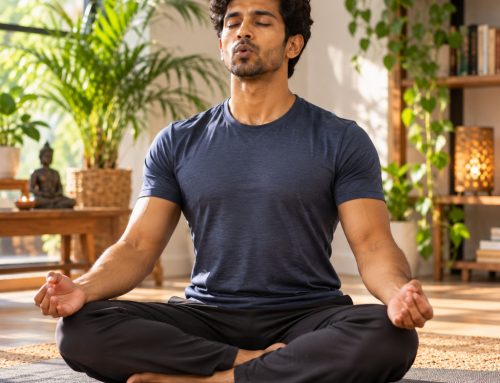
1. Breathe Slower Than You Think You Should (60–90 seconds)
Your breath is the fastest way to tell your body that you’re safe.
Try this for about a minute:
– Inhale through your nose for 4 seconds
– Hold for 2 seconds
– Exhale slowly through your mouth for 6–8 seconds
– Hum with exhale (optional)
Longer exhales activate the parasympathetic nervous system (your “calm mode”), lowering heart rate and reducing stress hormones almost immediately.
Tip: If counting feels stressful, just focus on making your exhale longer than your inhale.
2. Drop Your Shoulders and Unclench Your Jaw (30 seconds)
Stress hides in the body, especially in the jaw, shoulders, and hands.
Quick reset:
– Let your shoulders drop as low as possible.
– Unclench your teeth and open your mouth as wide as possible.
– Open your hands and stretch your fingers.
– Gently tilt your head side to side. (optional)
This physical release sends a powerful signal to your brain: the threat is over.
3. Name What You’re Feeling (10 seconds)
When emotions swirl, your brain goes into alarm mode. Naming the emotion helps calm it.
Silently say:
– “I’m feeling anxious.”
– “I’m overwhelmed.”
– “I’m frustrated.”
This technique—called affect labeling—reduces activity in the amygdala (the brain’s fear center) and restores rational thinking. You’re not becoming the emotion; you’re observing it.
4. Ground Yourself With the 3–2–1 Method (1 minute)
This is one of the fastest ways to stop spiraling thoughts.
Look around and identify:
– 3 things you can see
– 2 things you can feel
– 1 thing you can hear
– 1 thing you can smell (optional)
This anchors your attention in the present, pulling it away from worries about the past or future.
Two Additional Options
1. Ask One Calming Question (10 seconds)
Instead of “Why is this happening?” ask:
– “What is one small thing I can do right now?”
– “Will this matter in a week?”
– “What would I tell a friend in this situation?”
A single grounding question can interrupt panic and restore perspective instantly.
2. Use Temperature to Reset Your Nervous System (30–60 seconds)
Temperature changes can calm you surprisingly fast.
Options:
– Splash cold water on your face.
– Hold something cool (a bottle, mug, or ice pack).
– Take a slow sip of a warm drink.
Cold activates the “diving reflex,” slowing your heart rate, while warmth signals comfort and safety.
Conclusion
Calming down isn’t about forcing yourself to “be calm.” It’s about giving your nervous system the right signals—through breath, body, and attention. The more you practice these techniques, the faster they work. You don’t need to escape the situation. You just need a few minutes to come back to yourself.