
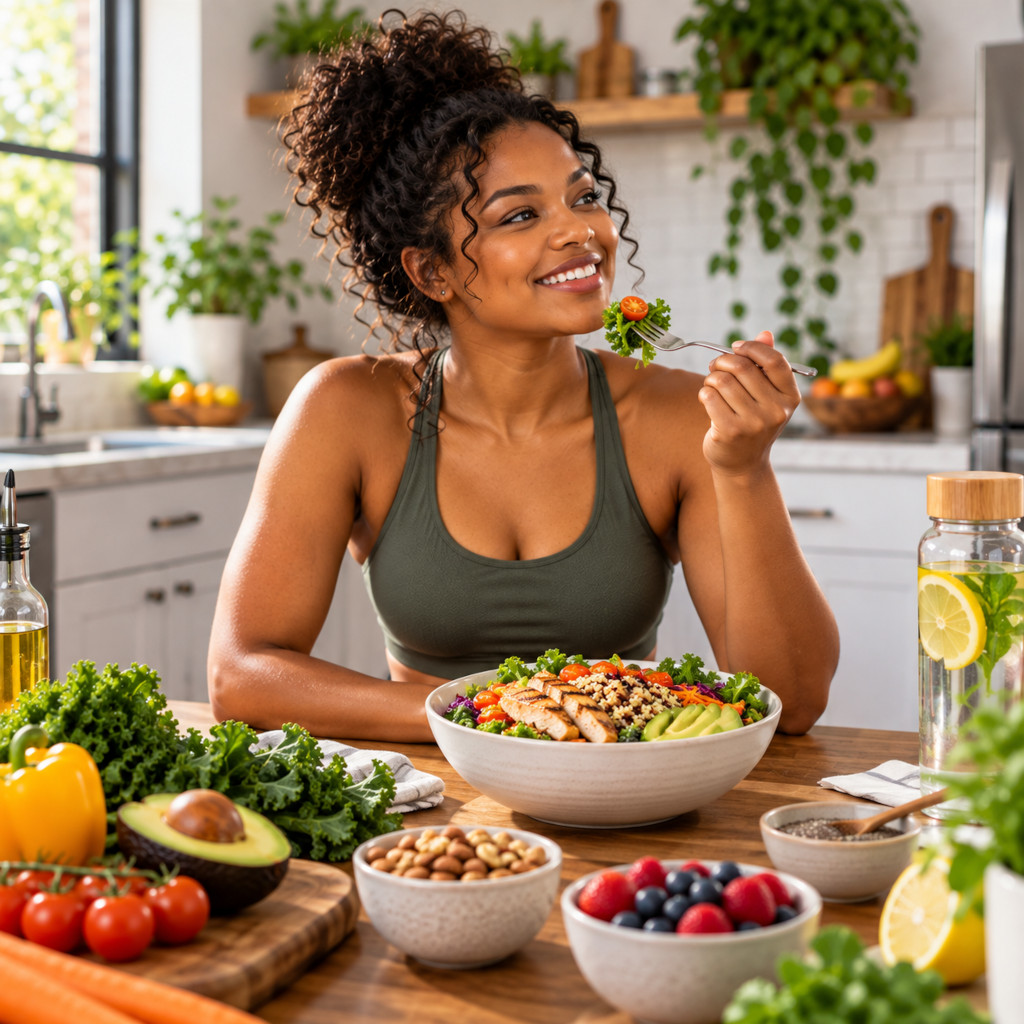
Most fat-loss advice focuses on one thing: eating fewer calories. Technically, that’s correct. To lose body fat, you need to consume less energy than your body uses over time. But knowing that doesn’t make dieting easy.
The real challenge is creating a calorie deficit without spending the entire day hungry, thinking about food, fighting cravings, and dragging yourself through workouts with no energy.
A good fat-loss diet shouldn’t feel like a daily battle against your biology. Instead of simply asking, “How can I eat fewer calories?”, a much more useful question is: How can I make eating fewer calories feel easier? Here are some less obvious strategies that can make a surprisingly large difference.
1. Stop Making Every Meal as Small as Possible
When people start dieting, they often immediately shrink every meal. A tiny breakfast. A light lunch. A carefully measured dinner. On paper, this looks disciplined. In practice, you may spend the entire day slightly hungry.
Sometimes it works better to have fewer but more satisfying meals. For example, instead of spreading your calories across six small meals and snacks, you might prefer three substantial meals that actually leave you feeling full.
The opposite can also be true. Some people become extremely hungry if they go too long without eating and do better with strategically placed snacks. The important point is that meal frequency isn’t a morality test.
Experiment with the pattern that gives you the fewest hours of uncomfortable hunger, not the pattern that sounds the most “hardcore.”
2. Put More of Your Calories Where Your Hunger Actually Is
Your calorie intake doesn’t need to be perfectly evenly distributed throughout the day. If you’re barely hungry in the morning but ravenous every evening, forcing yourself to eat a large breakfast may not be helping. You could eat lighter earlier and deliberately save more calories for dinner.
Conversely, if skipping breakfast makes you raid the kitchen at 11 a.m., eating a substantial breakfast may make your entire day easier. Think of calories as a daily budget. Spend more of that budget during the times when hunger, cravings, social eating, or training performance tend to be the biggest problem.
A diet that fits your natural hunger pattern is usually easier to maintain than one that constantly fights it.
3. Protein Helps, but Don’t Forget About Food Volume
Protein gets most of the attention in fat-loss diets, and for good reason. It generally helps with satiety and is important for maintaining muscle while losing weight. But protein alone doesn’t necessarily make a meal satisfying.
Compare:
A protein shake containing a few hundred calories.
Versus:
A large plate containing lean protein, potatoes, vegetables, fruit, and a flavorful low-calorie sauce.
The calories might not be dramatically different, but the eating experience certainly is. Foods containing plenty of water and fiber allow you to eat a physically larger amount of food for fewer calories.
Useful staples include potatoes, vegetables, soups, berries, melon, apples, Greek-style yogurt, legumes, lean meats, fish, eggs, and large salads with sensible dressings.You don’t need every meal to look like a mountain of vegetables.
But when hunger becomes a problem, increasing the physical amount of food you get for your calories can be incredibly effective.
4. Be Careful With “Healthy” Foods That Are Extremely Easy to Overeat
Healthy and fat-loss-friendly are not always the same thing. Nuts, nut butter, olive oil, granola, avocado, cheese, dried fruit, dark chocolate, smoothies, and coffee drinks can all fit into an excellent diet. They’re also very easy to consume in large amounts without becoming particularly full.
One tablespoon of oil disappears into a meal almost unnoticed. A generous spoonful of peanut butter can contain the calories of an entire piece of fruit plus yogurt. This doesn’t mean you should remove these foods. It means calorie-dense foods are often best used strategically rather than freely while you’re trying to lose fat.
A little cheese on a huge omelet may make the entire meal delicious. A measured amount of dressing can transform a giant salad. A small portion of chocolate after dinner may prevent you from feeling deprived.
Use calorie-dense foods to improve satisfaction—not necessarily as the foundation of the meal.
5. Make Your Food Taste Good
One of the fastest ways to hate dieting is to eat dry chicken breast, steamed broccoli, and plain rice every day because you think fat loss requires suffering.
It doesn’t. Use herbs, spices, mustard, salsa, pickles, vinegar, citrus, garlic, chili, soy sauce, low-calorie sauces, seasoning blends, and other flavorings you enjoy.
The objective is not to create the lowest-calorie meal theoretically possible.
It’s to create a meal that’s both calorie-efficient and satisfying enough that you don’t immediately start searching the kitchen for something better.
A diet you enjoy often requires less willpower than a technically “perfect” diet you hate.
In the second part of the article you’ll read about carbohydrates, sleep, emergency meals, liquid calories and more.